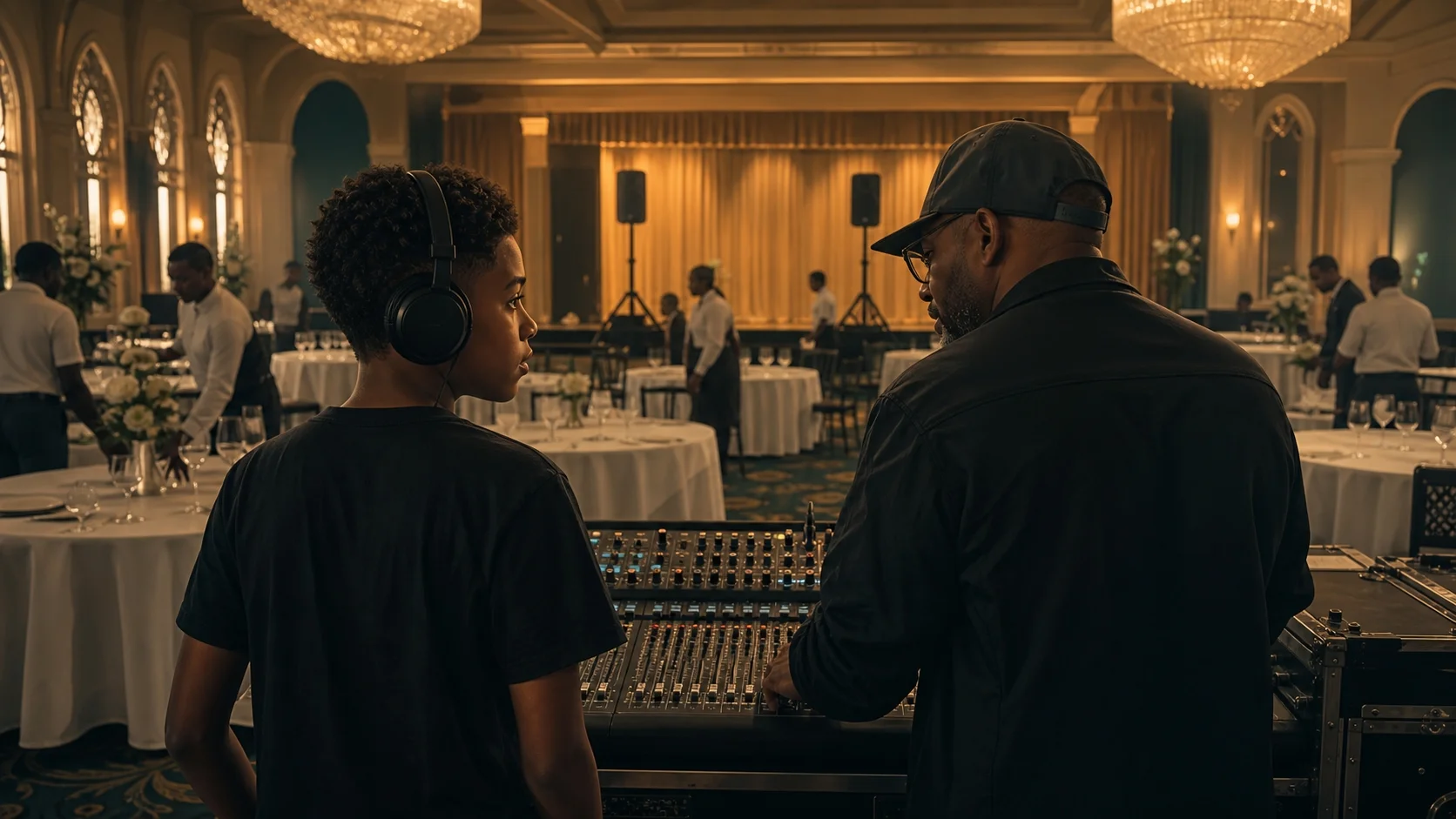
It is 6:30 in the morning. A truck pulls up at a hotel in Johannesburg. In four hours, 300 people will walk into the ballroom for an awards lunch. Right now the room is empty, the floor is bare, and the only sound is the air-conditioning.
By 10:30 there will be speakers on stands, a mixing desk at the back, four wireless microphones charged and labelled, a DJ rig ready to go, and one person wearing headphones who makes sure every word and every beat reaches the back row. That is the sound person. Today, you are shadowing them.
Walking the room
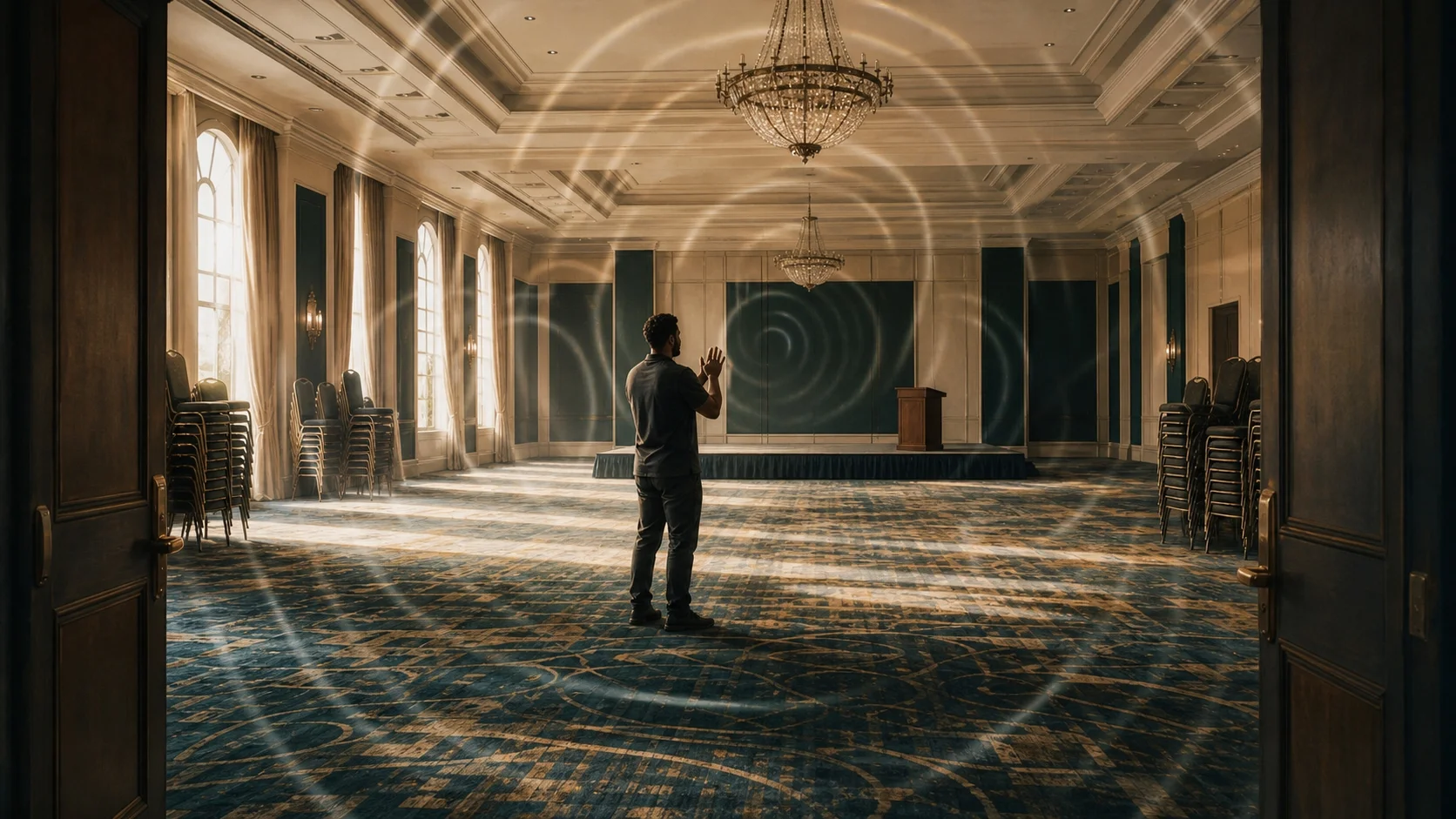
Before a single box comes off the truck, the sound person walks the room. They clap once and listen. A big echo means a "live" room where sound bounces, and speech will be hard to understand. Carpet and curtains soak sound up and make the room "dead". They look for the stage, the lectern, the plug points, and the best spot for the mixer: at the back, in the middle, where they can see the stage and hear what the audience hears.
Here is the secret that beginners miss: sound is just air moving in waves. High sounds are fast, tight waves. Low sounds are slow, long waves, and long waves are big enough to curl round corners and sneak under doors.
That is why you hear the bass from a party three streets away but not the singer.
Speakers go up
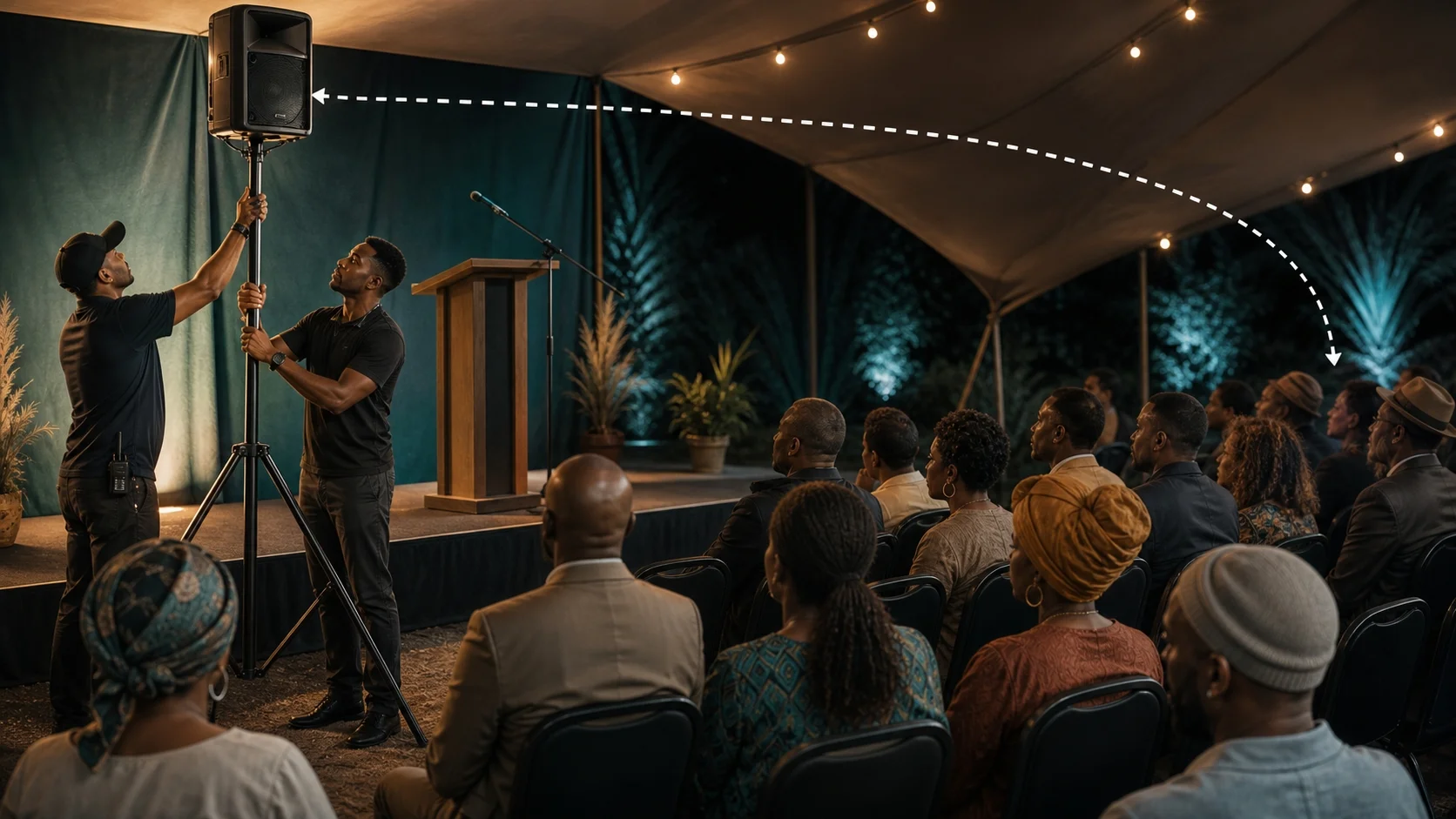
The first thing out of the truck is the speakers. They go on tall stands, higher than the tallest person, so the front row does not block the sound from the back row. They go in front of the stage, not behind it. And they get pointed at the people, not at the walls.
Why in front of the stage? Because of the squeal. If a microphone on stage can "hear" the speaker, the speaker plays what the mic hears, the mic hears that, the speaker plays it again, and in half a second you have the scream that everyone at every school assembly knows. It is called feedback. The number-one rule of live sound is: keep the mics in front of the speakers, and keep the mic close to your mouth. Do that and the squeal never starts.
Cables and the mixer
Next come the cables. Thick round ones with three pins are called XLR; they carry sound from the microphones to the mixer. The crew runs them along the walls and tapes every crossing, because a cable across a doorway at a lunch for 300 people is a trip waiting to happen.
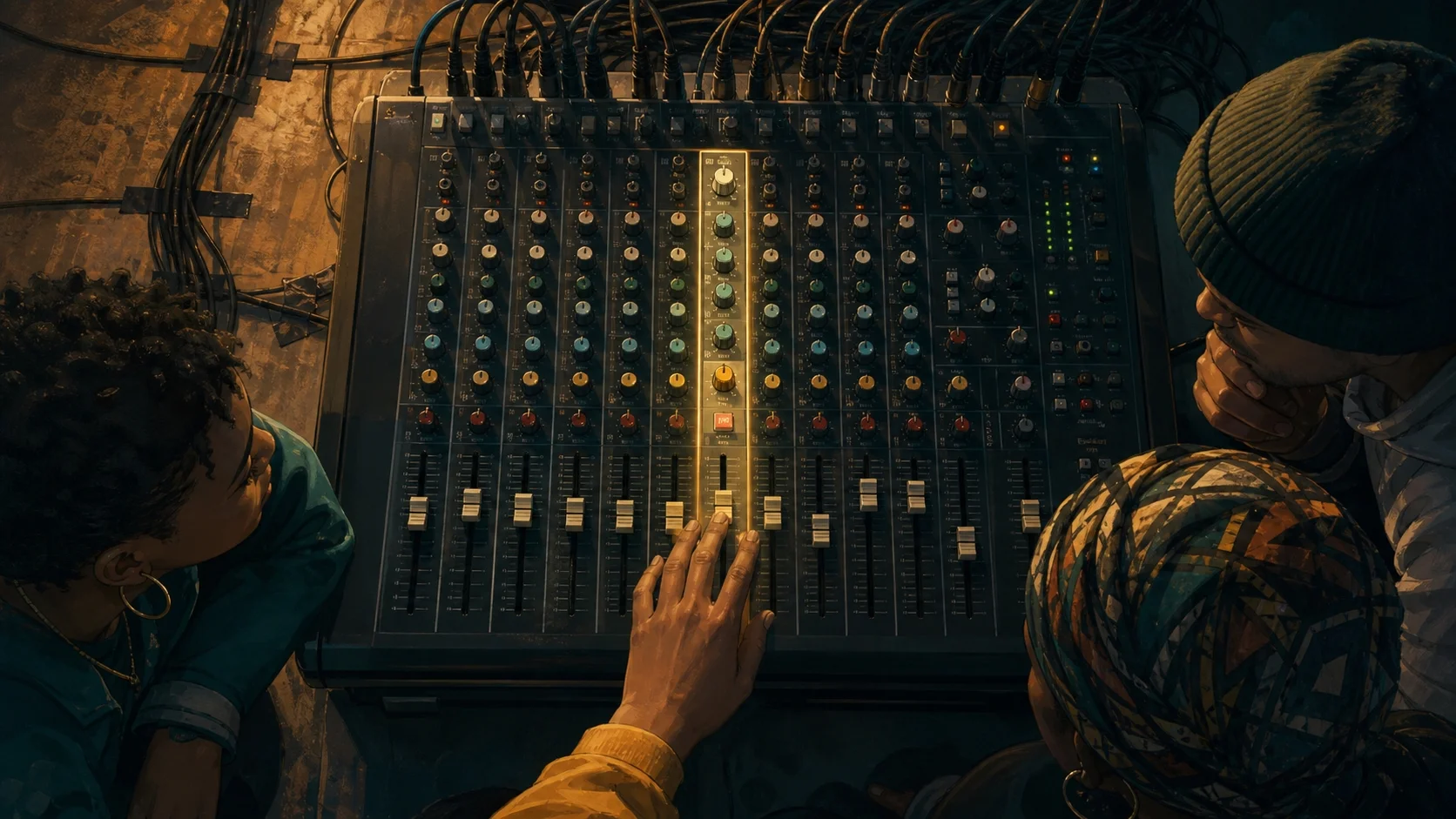
All the cables end at the mixer. It looks like a spaceship control panel, but it is really the same four controls repeated for each microphone:
- A gain knob that makes the weak signal from the mic strong enough to work with. Set once, left alone.
- Three EQ knobs for bass, middle and treble. Boomy voice? Turn down the bass. Muffled? Turn up the treble a touch.
- A mute button. Any mic not being used gets muted. Always.
- A fader, the long slider at the bottom, which is the volume for that one mic.
All the faders flow into the big master fader on the right, which is the volume for the whole room. That is the entire job of a mixer: make each sound strong, make each sound nice, blend them at the right volumes.
Soundcheck
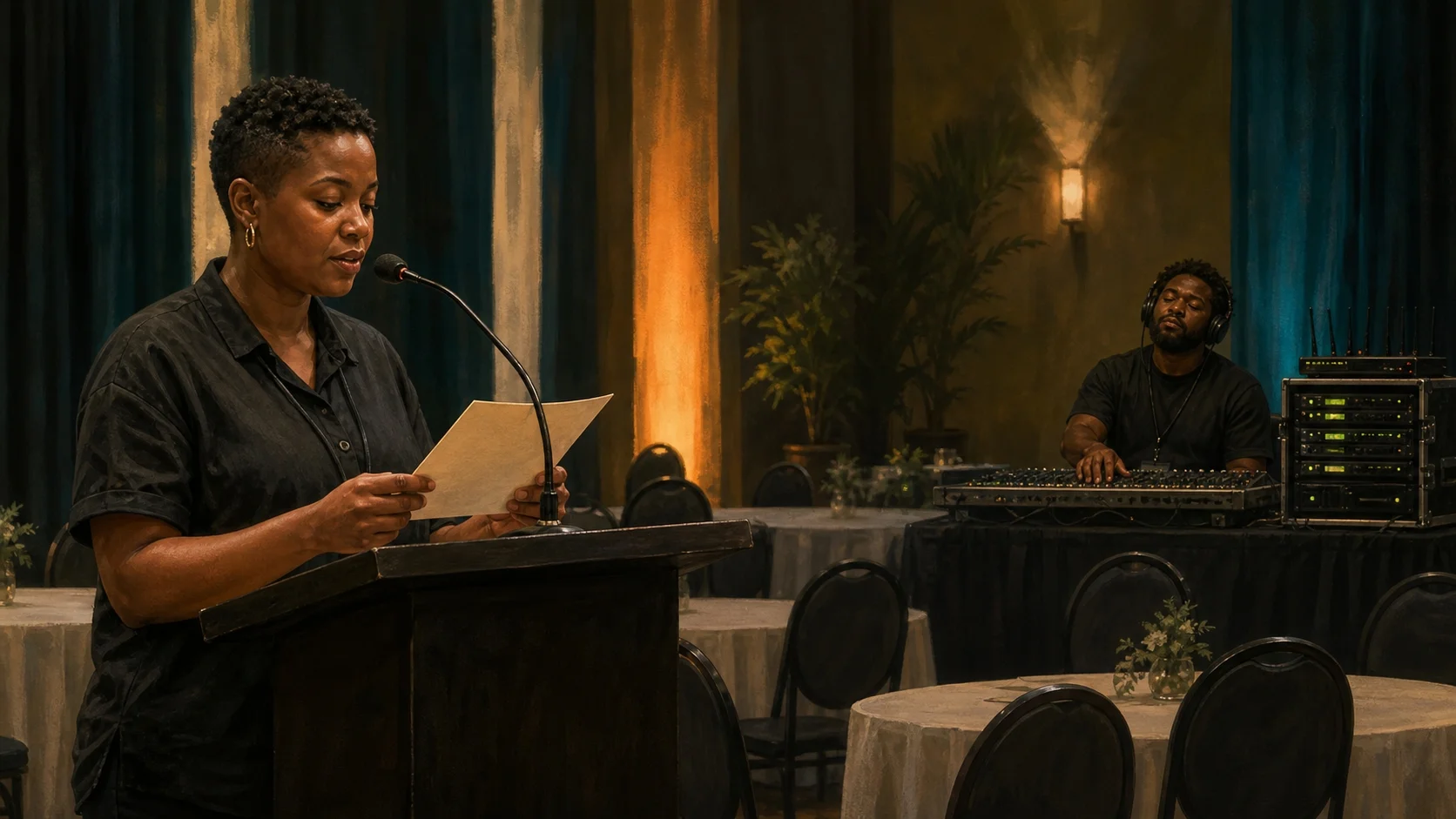
Now the fun part. A crew member stands at the lectern and reads anything, usually the menu, while the sound person sets the gain and listens. Too boomy, cut the low knob. Hard to understand, add a bit of the high knob. Then they push the fader up until the mic just starts to ring, note which note it rings on, and turn that one frequency down. This is called "ringing out" the system, and it is how the sound person buys themselves safety for later when the MC walks somewhere they shouldn't.
Then the wireless mics. Each one is a little radio station on its own channel. Two mics on the same channel will fight, so each receiver is scanned for a clean frequency and fresh batteries go in.
Then the DJ's gear gets plugged in through a little metal box called a DI, which turns the DJ mixer's signal into something the big mixer likes. Then a song is played at the back of the room while the sound person walks every corner, listening for dead spots.
Doors open
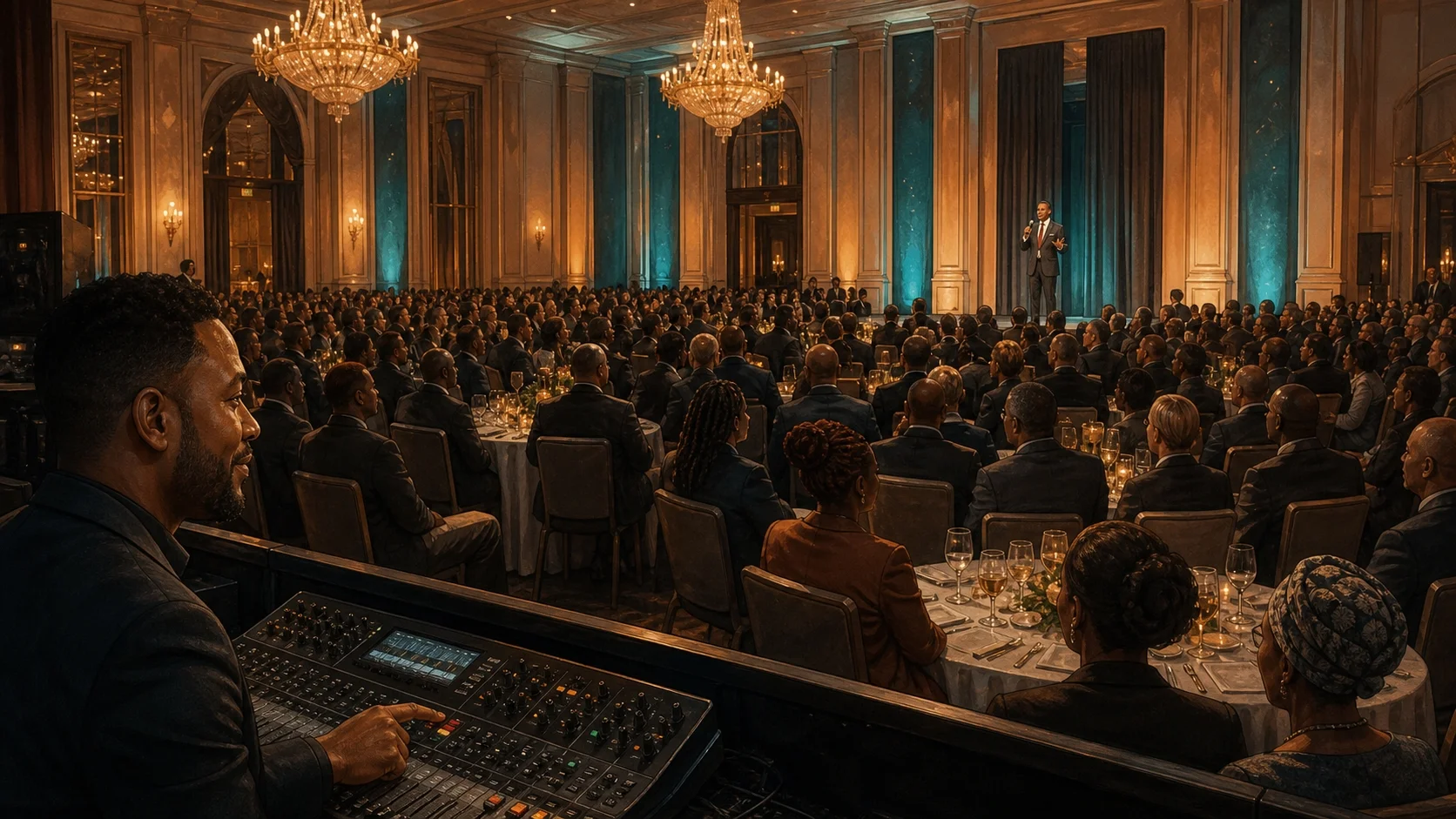
From now on the sound person does not sit down. The MC walks on; the MC's fader goes up and the music fader comes down at the same moment, so there is no gap and no bump. The CEO speaks quietly; the sound person nudges the fader, and a compressor on the channel quietly evens out the loud and soft bits so nobody has to strain. Award winners walk up; the walk-up music fader rises for ten seconds and drops under the next speaker. A guest wanders in front of the speaker with a handheld mic; the sound person already has a finger on mute.
When it goes well, nobody notices. The speeches were clear, the music was good, and the room just sounded like a room. That is the job.
Could you do it?
The sound person needs three things. A bit of science (waves, electricity, decibels: every 10 dB louder sounds twice as loud). A good pair of ears and the patience to listen. And calm, because when something goes wrong in front of 300 people, the fix is always the same: walk the chain from the microphone forward, find where the sound stops, and swap that one thing.
Three things to try this week
- At your next school assembly, watch where the speakers are and where the mic is. Are the mics in front? Did it feed back?
- Next time you are in a car, find the bass and treble controls. Turn the bass right down while someone is talking on the radio. Now turn it right up. You have just used EQ.
- Clap once in your bathroom, then once in your bedroom. Which is the "live" room?
Quick quiz
Want the real thing at your school?
Howzit Live puts together sound, staging, DJs and the whole event in one place. If your school, club or youth group wants a sound crew to run an event and show the kids how it works, get in touch. This guide is free to share.
Book Howzit Live for a school eventWant the classroom version? Try the free Sound School lessons from B&W Productions.