
Crew Training
Learn the gear behind a live event
Free, hands-on training sessions for anyone getting started in event crew work. Each module has a short narrated video, written lessons with diagrams, an interactive tool, a quick quiz and a downloadable PDF booklet. Work through them in order, or jump to the one you need.
 Module 1
Microphones for Event Crew
How mics work and which one to put on what — dynamic vs condenser, polar patterns, cables, wireless, placement, gain, feedback and a fault-finding table.
 Module 2
Sound Basics for Event Crew
How a PA works, from the mixer to the speaker. Decibels, amplifiers, ohms, series and parallel wiring, and how to set up a small system that sounds right.
 Module 3
Line Arrays & Subwoofers
Why a line of speakers throws further than a single box, how column and line-array elements work, and how to place, align and tune subwoofers.
 Module 4
Lighting Basics for Event Crew
What each light does at an event, the fixtures you will meet, how colour and DMX work, and how to cable, power and hang a rig safely.
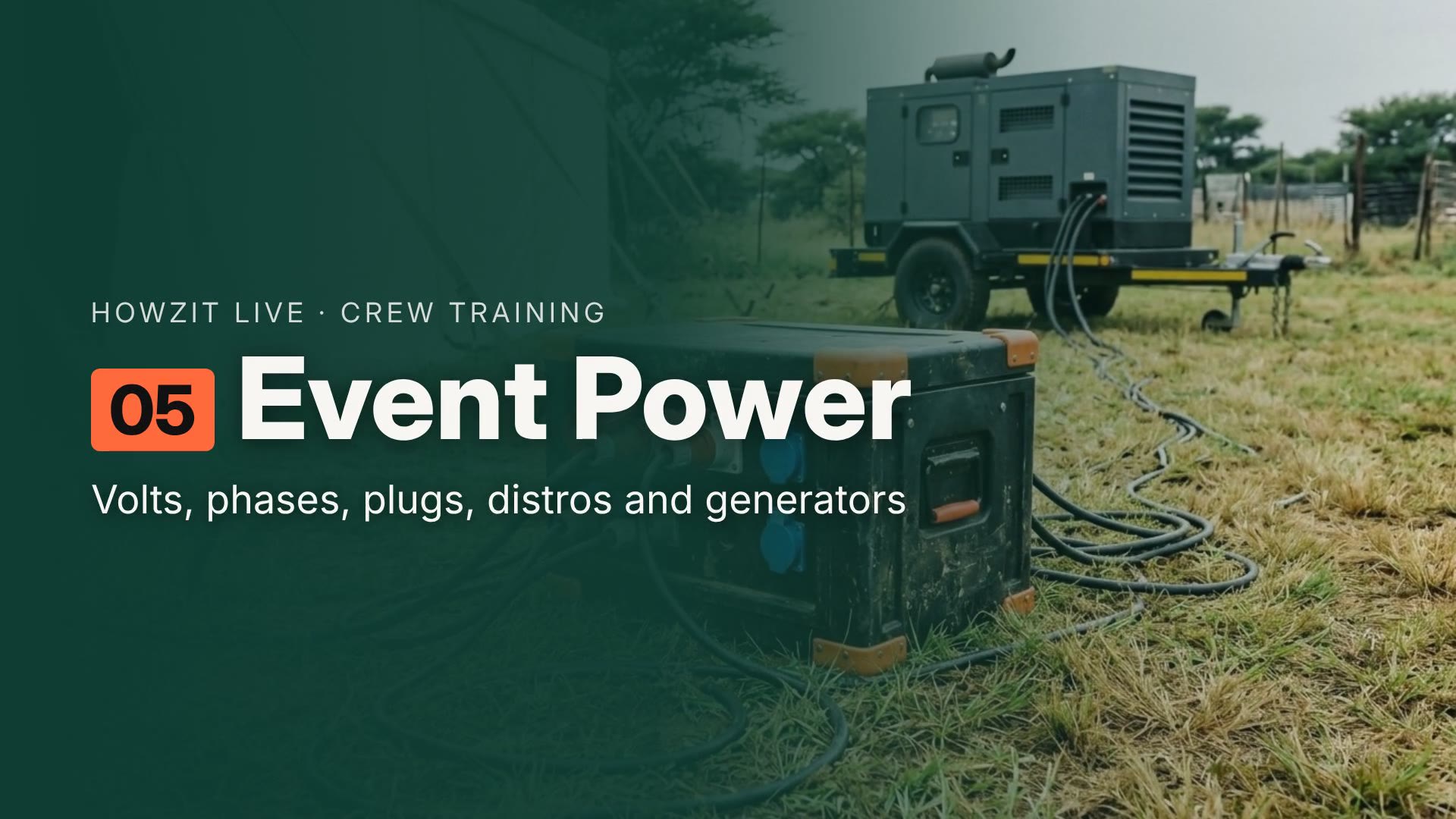 Module 5
Event Power for Crew
Volts, amps and watts. Single- and three-phase, commando plugs, distros and generators, and how to split a supply down to the socket safely.
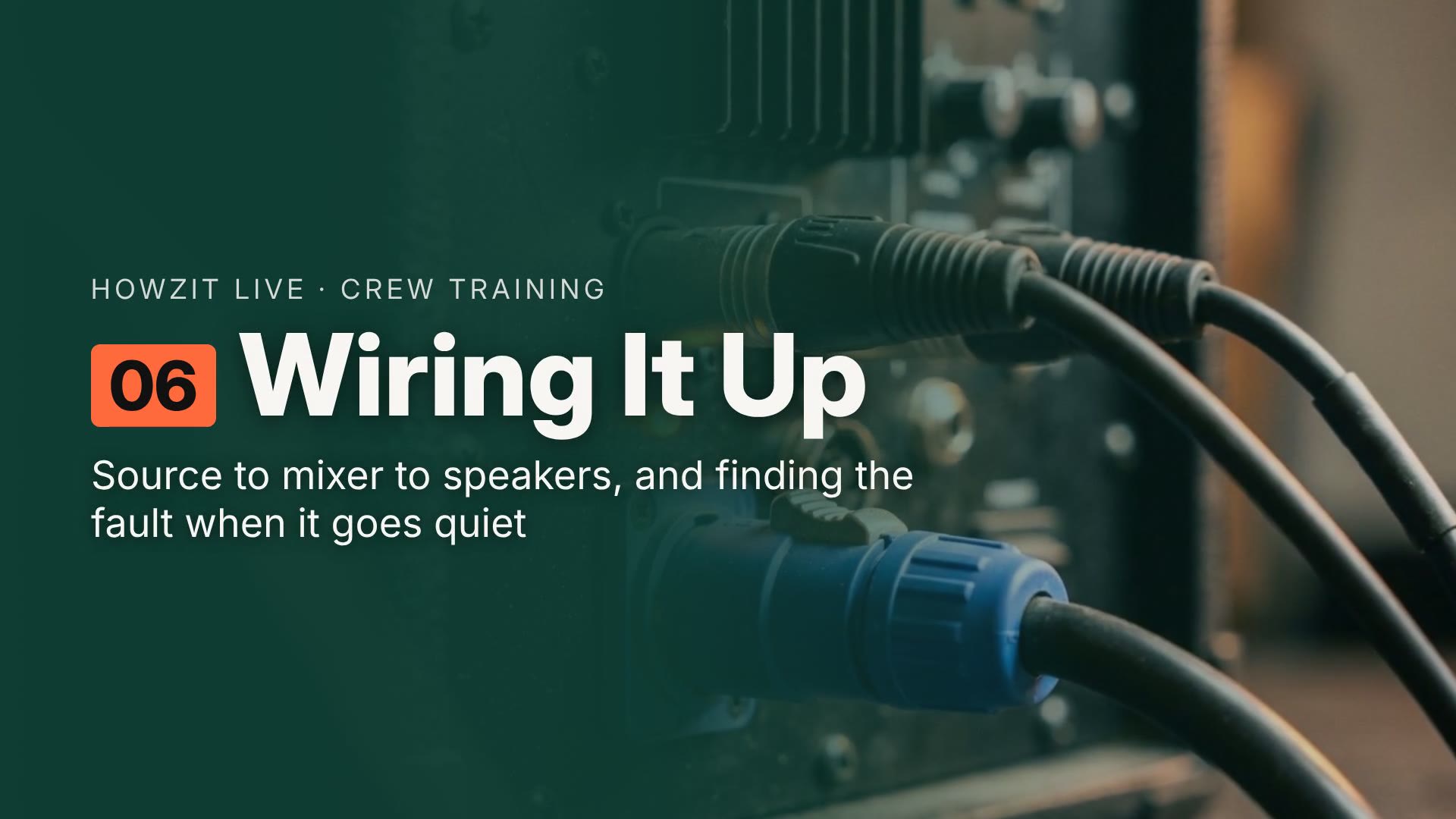 Module 6
Wiring It Up
How the cables actually run — player or controller into the mixer, mixer into powered speakers, adding a third box, a processor in the chain, and driving passive speakers from an amp. Every diagram is live.
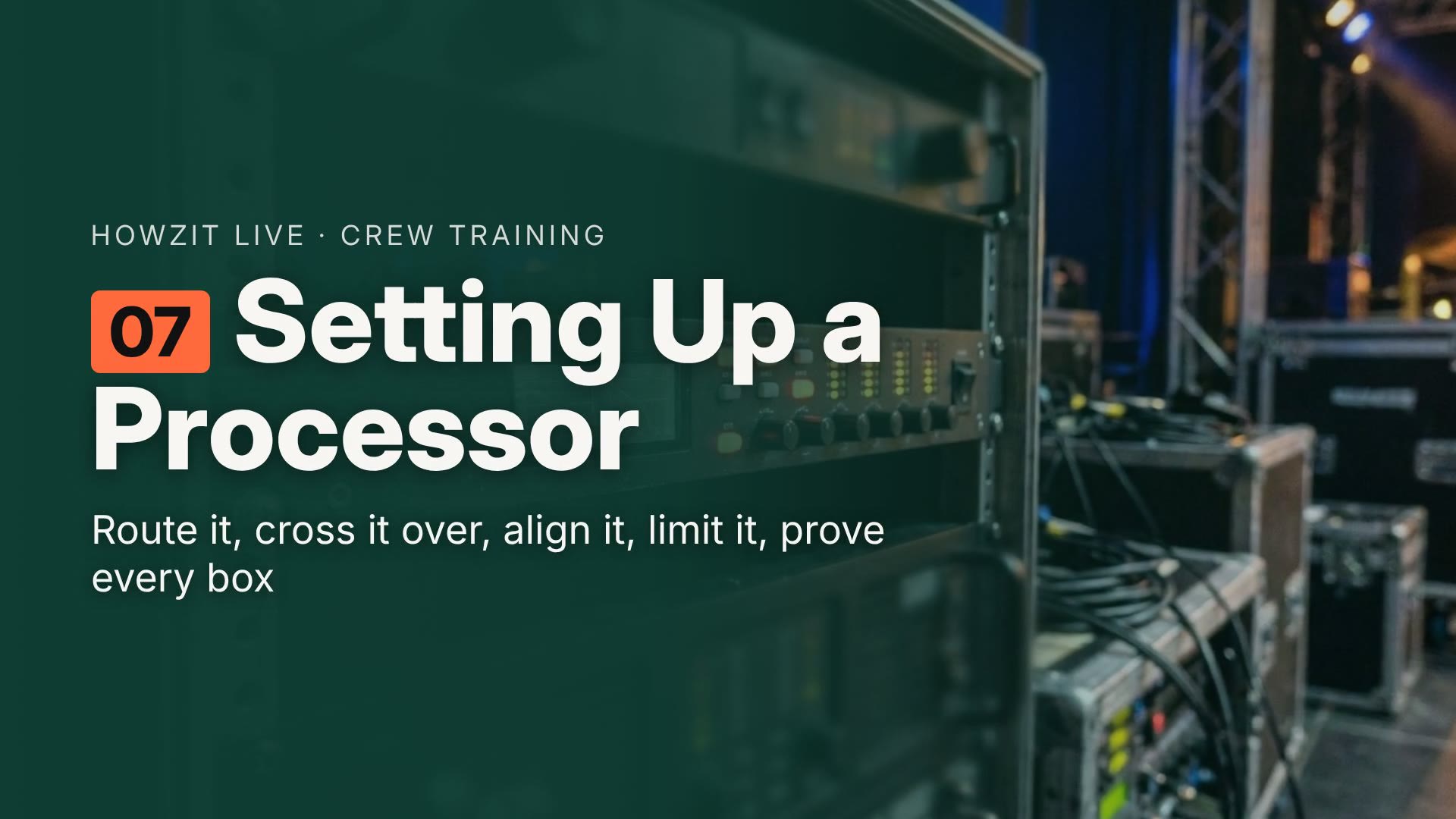 Module 7
Setting Up a Processor
The processor is the brain between your mixer and the amps — ins and outs, routing, crossover points and slopes, delay and polarity, limiters and gain structure, plus a rack-lid checklist so every box gets exactly the band it is built for.
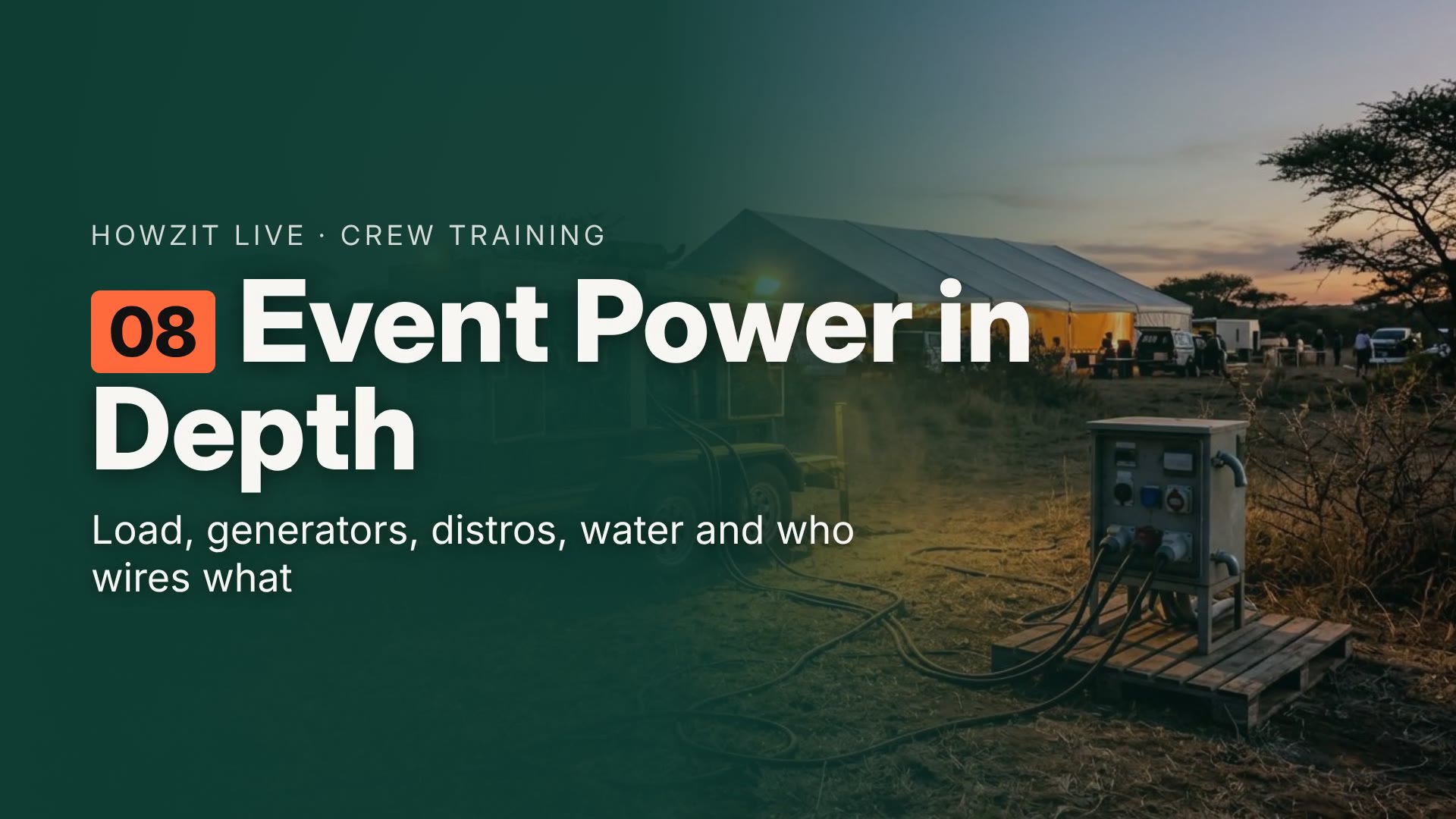 Module 8
Event Power in Depth
Takes Module 5 further — build a load sheet, stop multiplugs and couplers overloading, keep joints dry, size and run a 20, 30 or 50 kVA generator, balance three phases, earth leakage, and exactly where crew stop and the electrician starts.
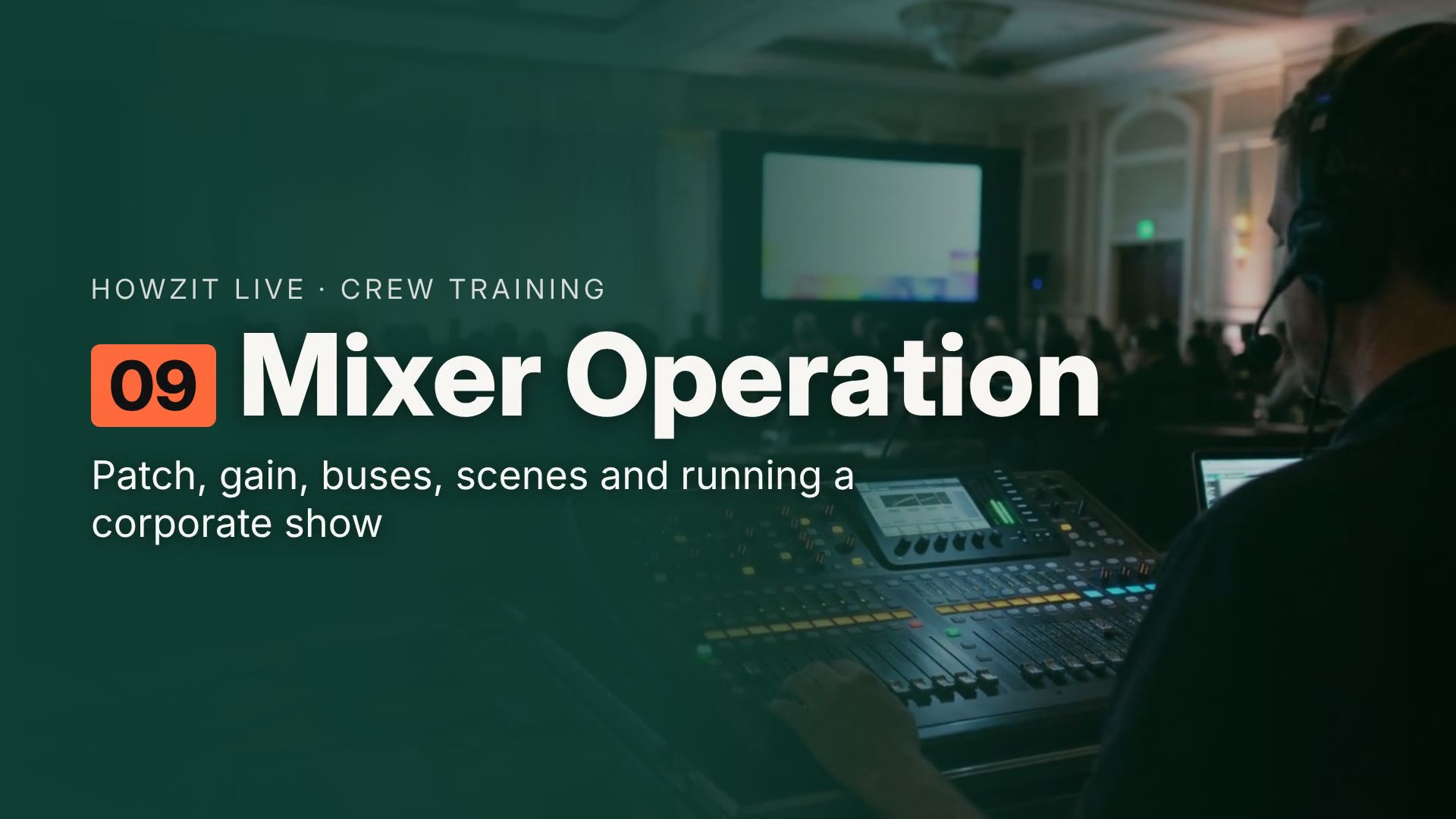 Module 9
Mixer Operation
How to run a 16-channel digital desk at a corporate event — patching and naming channels, the channel strip in order, gain staging, monitor mixes, DCAs and mute groups, effects and scenes, and a routine for speeches and awards nights.
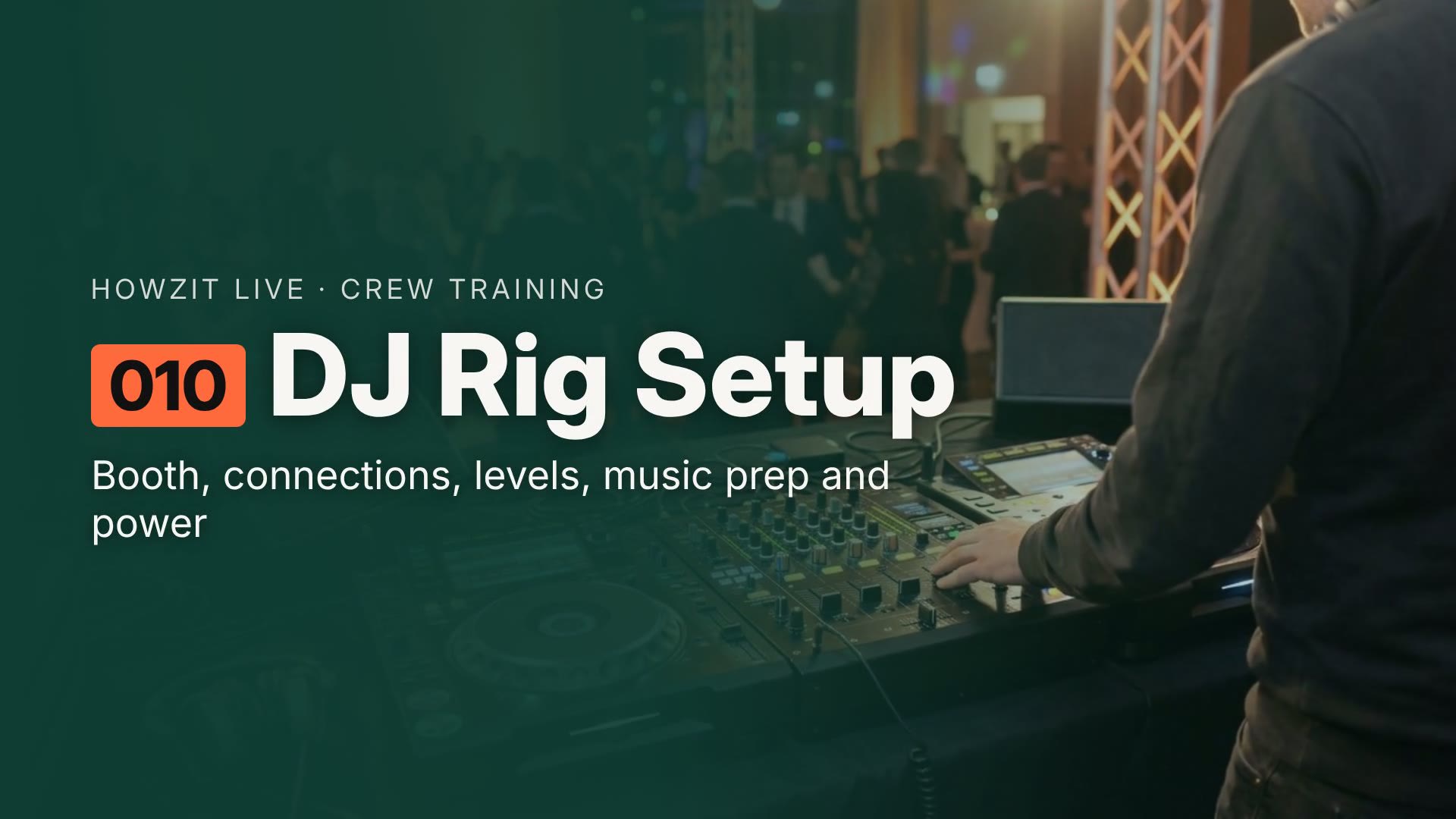 Module 10
DJ Rig Setup
Setting up a DJ booth for a corporate event or activation — the three kinds of rig, table and layout, connections, setting levels with the FOH engineer, music prep, power, turntables, changeovers and the MC.
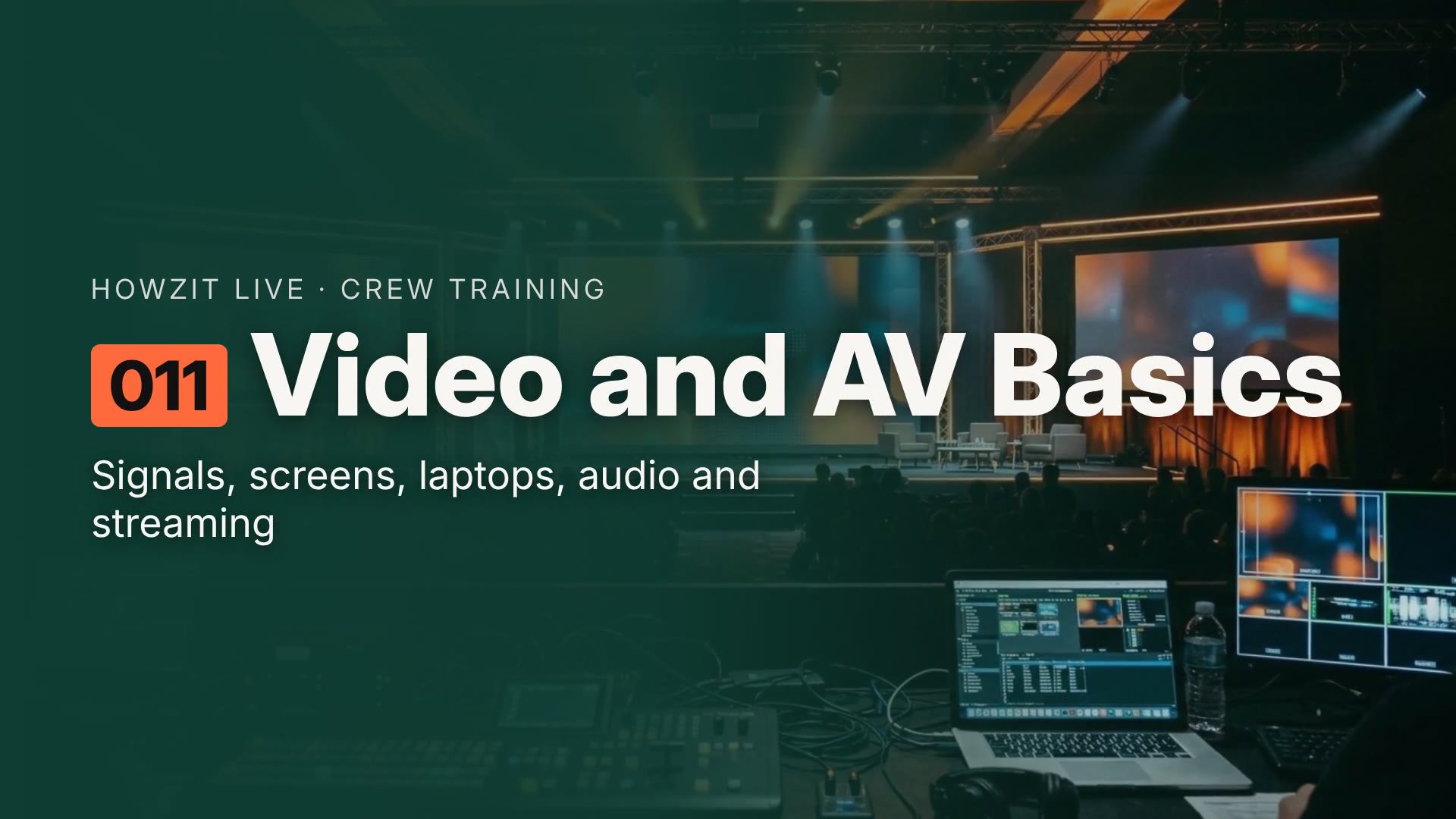 Module 11
Video & AV Basics
The AV side of conferences, awards and launches — cables and links, resolution and screens, the presenter laptop, getting laptop audio into the desk without hum, why a screen stays black, and the basics of a video mixer and a stream.
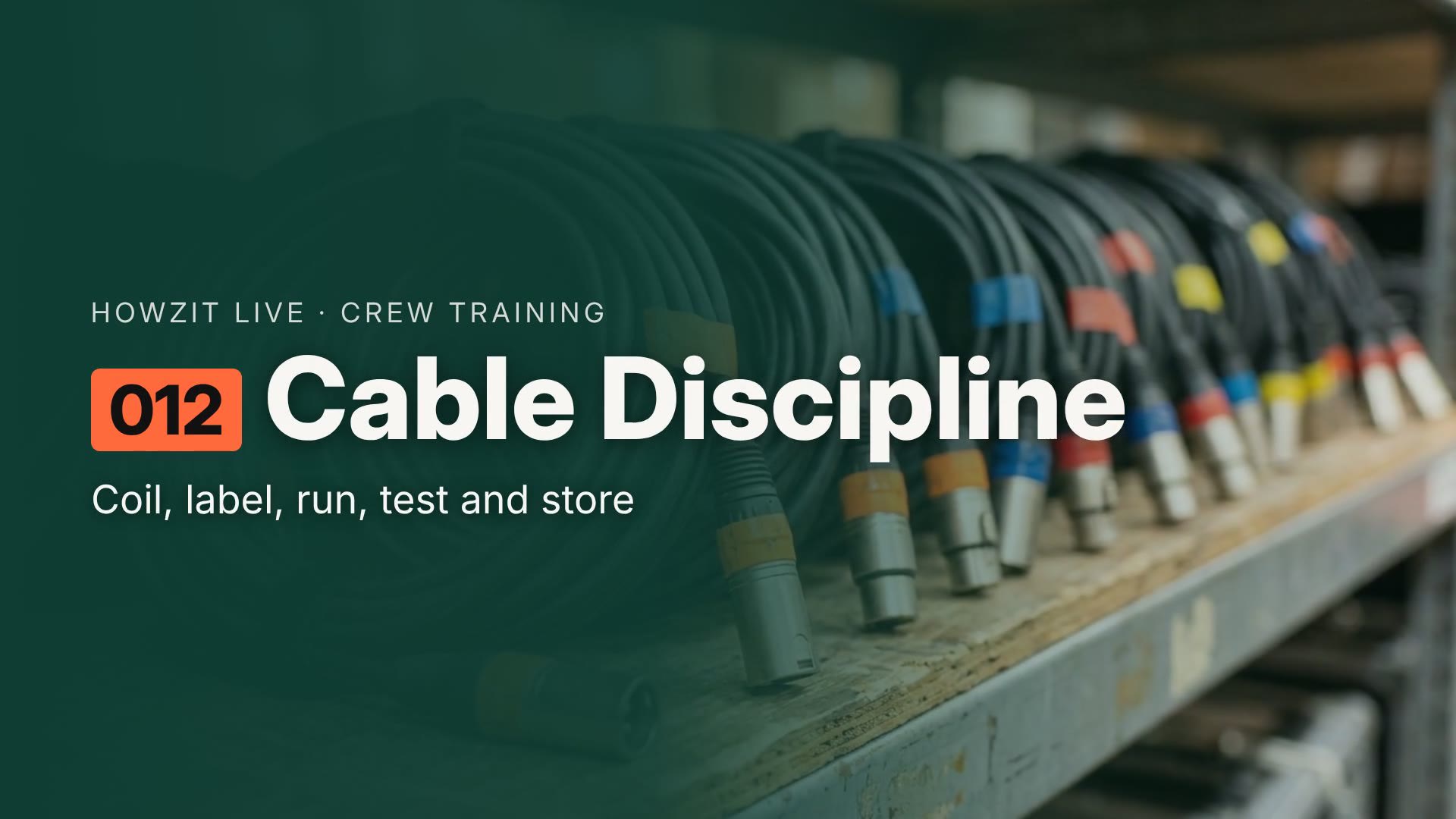 Module 12
Cable Discipline
Most show faults are cables, and most cable faults are avoidable. How to coil, pick, label, run, test and store cable so it works on the night and is safe to walk past — for anyone who will ever unroll a lead.
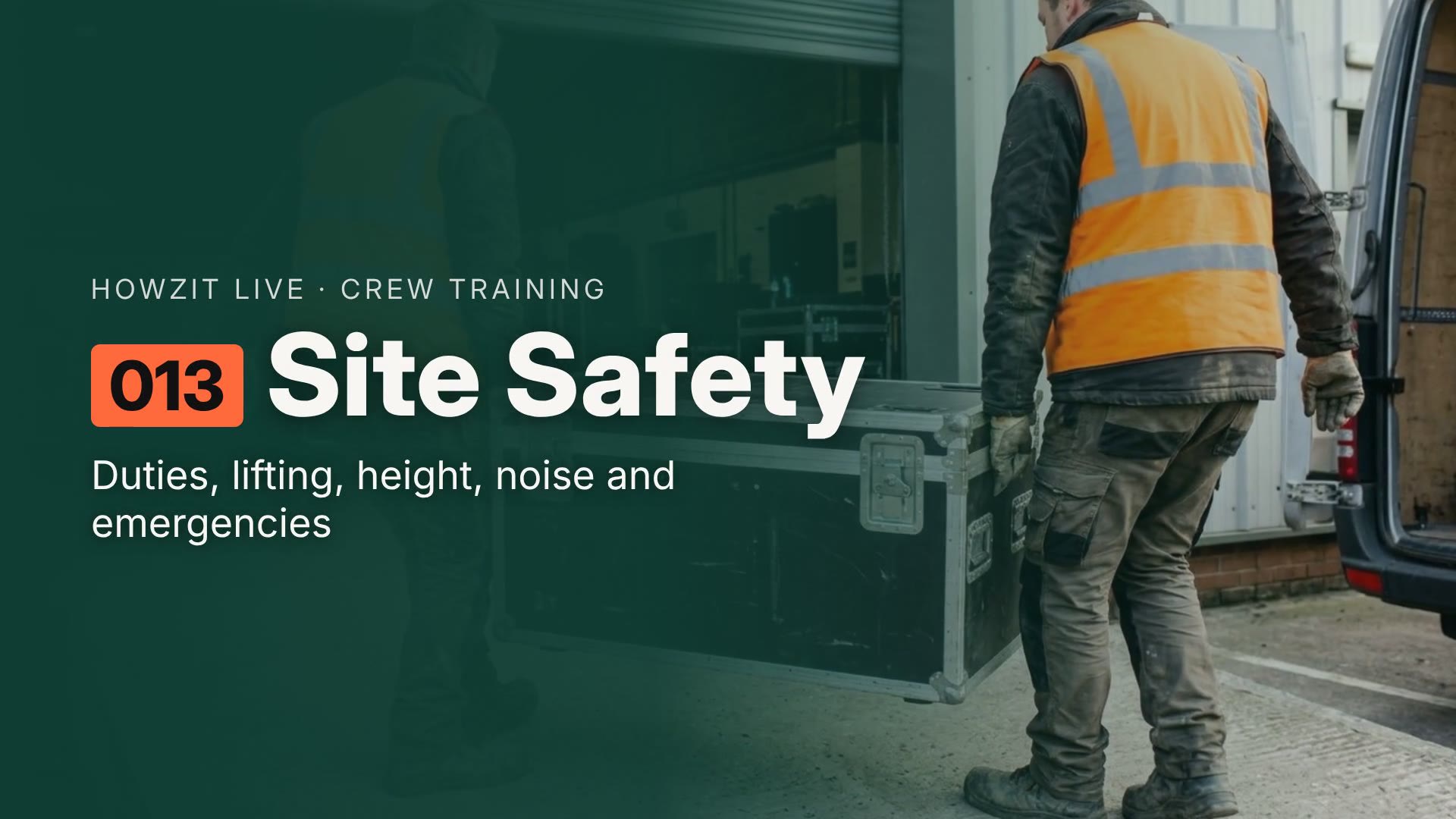 Module 13
Site Safety
The law, habits and gear that keep a crew unhurt on site — your duties under South African law, a five-minute risk check, PPE, safe lifting, ladders and height, stands and wind, noise, fire, weather and lightning, and vehicles.
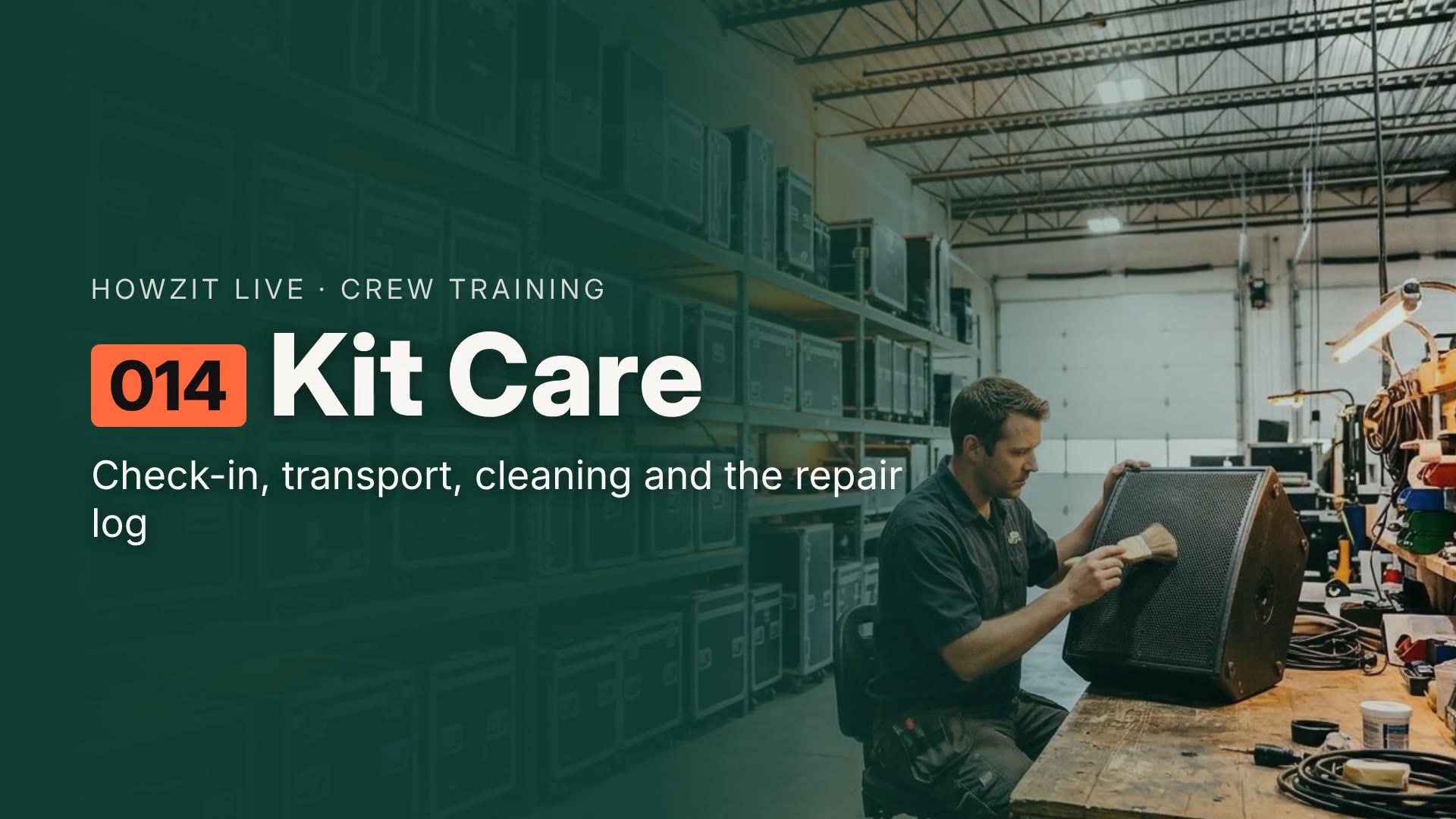 Module 14
Kit Care
Kit that is looked after works on show day. The habits that keep it working — counting kit out and back, loading the truck, cleaning, storing batteries and gas, tagging faults and keeping the maintenance schedule.
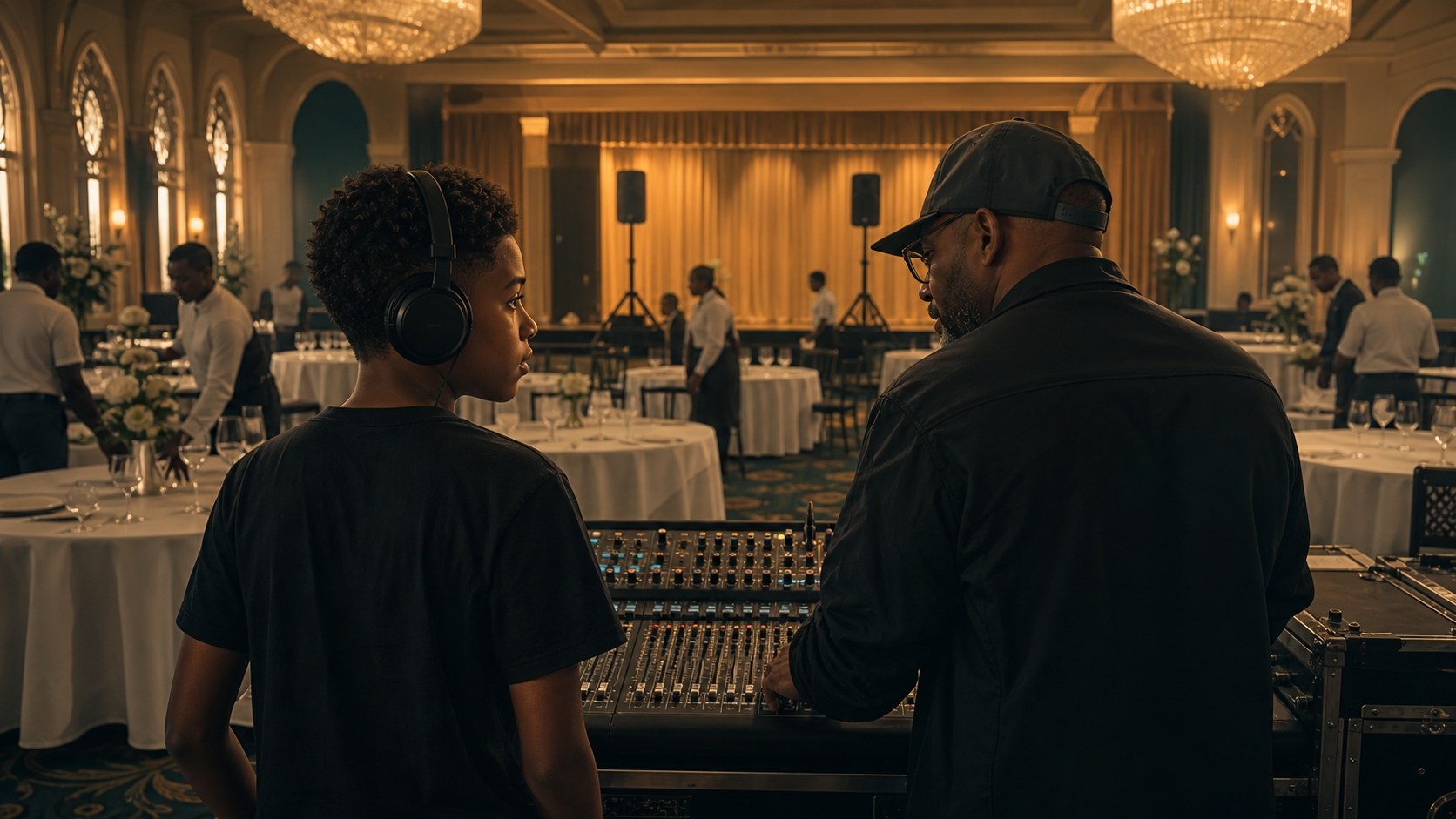 Bonus · Kids
Be the Sound Person: A Kid's Guide to Live Sound
Shadow a sound engineer through a full event day — speakers, mixers, feedback and soundcheck — in a free, hands-on interactive guide for ages 11–16.
Want to work with us?
Howzit Live is in beta. If you crew events and want to join the network, we'd love to hear from you.
List your business